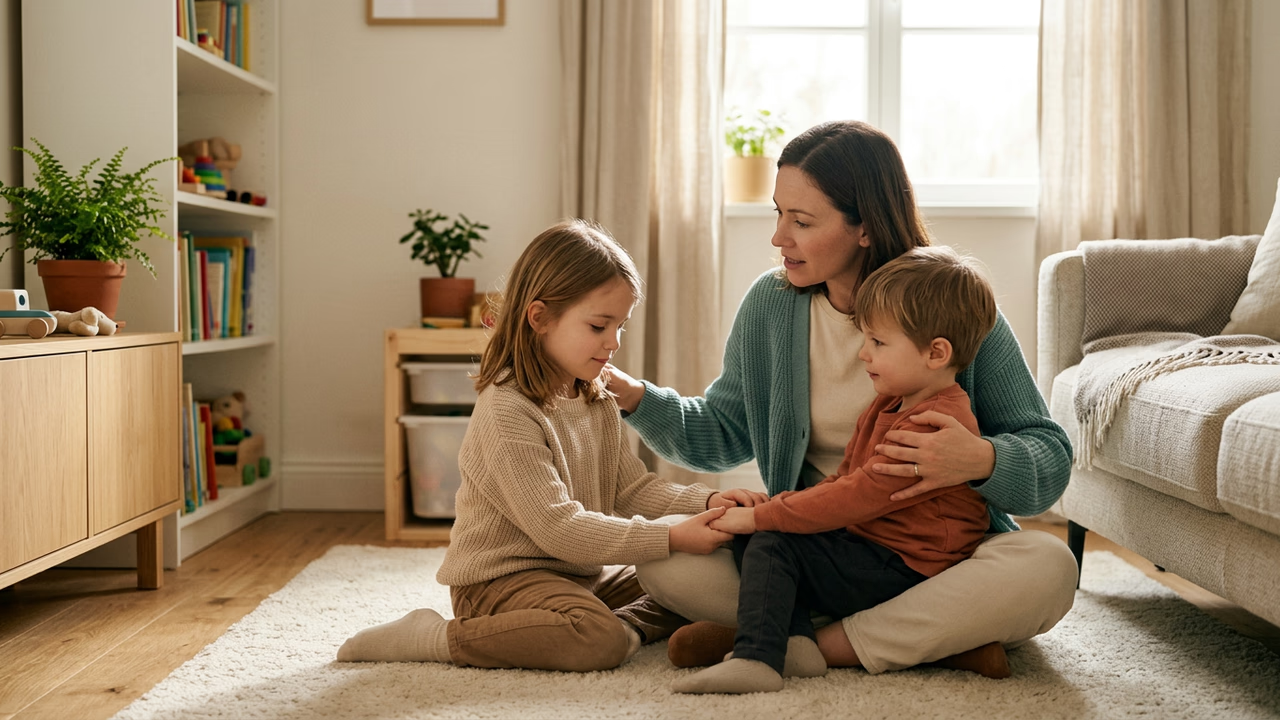
By 8 a.m. on a Saturday, my three had already fought about the good cereal bowl, who pressed the elevator button last time, and whether a certain stuffed rabbit was "looking at" the other one. I remember standing in the kitchen thinking, I am a child psychologist, and I cannot get my own children to stop screaming at each other.
If that's your morning too, take a breath. Sibling fighting is one of the most normal things children do, and it's also one of the most exhausting. The good news is that you don't have to solve every argument or figure out who started it. You mostly need a few calm scripts and the willingness to stop being the judge. Here's exactly what to say.
The short version
- Some sibling conflict is healthy. Home is where kids practice negotiating and repairing.
- Stop playing referee. Be a sportscaster who narrates and a coach who hands the problem back.
- Never investigate who started it. Assigning a villain just teaches kids to compete for your verdict.
- When it turns physical, safety and separation come first, talking comes later.
- Most fighting spikes around predictable triggers: tired, hungry, bored, or starved for your attention.
Why Siblings Fight (and why some of it is good for them)
I know it doesn't feel like it at 8 a.m., but sibling conflict is one of childhood's most important training grounds. Your kids are practicing negotiation, compromise, reading another person's face, and repairing after a rupture, all with the one person they feel safe enough to be their worst with. That safety is a backhanded compliment to you.
That doesn't mean you ignore it. It means your goal shifts from "make the fighting stop" to "help them build the skills so the fighting gets shorter." The Child Mind Institute frames the parent's role here as a coach, not a referee, and that single reframe takes enormous pressure off you.1 When the fight is really a power struggle — two kids fighting for control rather than over an object — the techniques in ending power struggles apply here too.
The Referee Trap: Be a Sportscaster, Not a Judge
The fastest way to make sibling fighting worse is to march in and hold a trial. "Who started it?" turns your two kids into competing lawyers, each one performing their innocence for you, the judge. Now they're not solving a toy problem; they're fighting to win you.
A sportscaster does the opposite. They narrate what's happening without blame, which makes both kids feel seen and instantly lowers the temperature: "I see two kids who both want the blue marker, and a lot of frustrated faces." From there, you hand the problem back instead of solving it for them.
Scripts to Stop the Fight in the Moment
When you have no idea who started it (which is always)
Resist the investigation entirely. Narrate, name the limit, hand it back:
"Two kids, one toy, lots of big feelings. I'm not going to figure out who started it. What's your plan?"
"Wow, you two are really stuck. Do you want some help, or do you want to work it out yourselves?"
"I trust you both to solve this. I'll hold the marker while you make a plan."
When it's getting physical
Calm authority and bodies first. Solutions can wait until everyone is regulated:
"I won't let you hurt each other. We're taking a pause. Then we'll solve it."
"Looks like you each need a break in a comfy spot. Bodies calm first, talking after."
"Your job is to move your body away first, not to hit first. Let's reset."
When they beg you to take sides
Stay warm and stubbornly neutral:
"You really want me to say she's wrong. I'm not going to pick a bad guy. I am going to help you both feel heard."
"I believe each of you that it felt unfair. Now, what would make it fair from here?"
Scripts to put in your kids' mouths
Some of the best scripts are the ones you teach them to say to each other. Coach the words directly:
"Try this: 'I'm still using it. You can have it when I'm done.'"
"Tell him with your words: 'Stop, I don't like that.' If that doesn't work, come get me."
"Ask her: 'Do you want to take turns or play together?'"
A calm script for every kind of fight
The Calm Parent Scripts Guide has 115+ word-for-word scripts for sibling conflict, tantrums, back talk and more, organized by age with a printable cheat sheet. Written by Dr. Maya.
See what's inside the guide →Say This, Not That
"Who started it?!"
"I don't need to know who started it. What's the plan to fix it?"
"You're older, you should know better!"
"You both have big feelings right now. Let's slow this down together."
"If you can't share, I'm throwing it away!"
"This toy is taking a break until you've got a plan to share it."
Sibling Scripts by Age
Ages 2–5
Little ones can't truly share or see another's view yet, so keep it concrete and supervise closely:
"You want it, and he's using it. Your turn is next. Let's set a timer."
"Gentle hands. If you're too mad for gentle hands, come stand by me."
Ages 6–10
Older kids can handle real problem-solving and crave being treated as capable:
"You two are smart and you know each other well. I bet you can find a deal you both like. I'll check back in five."
"What's a fair way to decide who goes first that you'd both accept?"
Preventing the Next Fight
Most sibling blowups are predictable. A little prevention beats a lot of refereeing:
- Feed and rest them. A startling amount of fighting is just low blood sugar and tiredness in disguise.
- Protect special things. Each child gets a few items they never have to share. Forced sharing of everything breeds resentment.
- Fill their cup first. Kids who are competing for your attention will fight to get it, even negatively. Ten unhurried minutes each often cuts the squabbling more than any consequence.
A fight is often just a big feeling with nowhere to go. When one child is flooded, calm-down scripts for kids with big emotions help you settle them before you problem-solve. And for the full toolkit covering every hard moment, see what to say instead of yelling.
Free: The Calm-Down Scripts Cheat Sheet
Get a one-page printable of the most-used calm scripts, perfect for the fridge or your phone. Sent straight to your inbox.
When Sibling Conflict Needs More Help
Everyday bickering is normal. Reach out to your pediatrician or a child therapist, though, if one child is consistently frightened of another, if the aggression is severe or causing injury, if one sibling is always the target of cruelty rather than mutual squabbling, or if the conflict is relentless and nothing shifts it. Those patterns deserve a professional's eyes, and getting support early protects everyone in the house.
Frequently Asked Questions
For ordinary squabbles, stay out as much as you safely can, since kids learn conflict skills by working things out. Step in calmly when it turns physical, when one child is genuinely overpowered, or when they're stuck. When you do step in, act as a coach who narrates and helps, not a judge who decides who's guilty.
Skip the investigation into who started it. Narrate what you see ("two kids, one toy, lots of big feelings"), name the limit ("I won't let anyone get hurt"), and hand the problem back ("what's your plan?"). Refusing to assign a villain stops kids competing for your verdict and starts them solving the actual problem.
Some sibling conflict is normal and even useful: home is the safe place where kids practice negotiating, sharing, and repairing. Fighting often spikes when kids are tired, hungry, bored, or competing for a parent's attention. Frequent fighting is usually a signal to address those triggers, not a sign anything is wrong with your children.
Safety first and calmly. Move between them, say "I won't let you hurt each other," and separate them into different spaces to cool down before any talking. Address solutions only after bodies are calm, because no one can problem-solve while flooded. Teach the rule: move your body away first, don't hit first.
References
- Child Mind Institute. When Siblings Won't Stop Fighting.
- Nemours KidsHealth. Sibling Rivalry.